// 01 · THE SPRINT · STAGES 01 TO 05
Pressure-test your product idea in about 15 minutes.
A structured, AI-guided interview, scripted and reviewed by experienced engineers. You get back a quick-draft Specification and Viability Report, copy-ready to refine, brief an engineer with, or stand behind in front of investors.
CUSTOM GPT · BUILT BY CAST IRON CAD · NO SIGNUP · NO PAYMENT
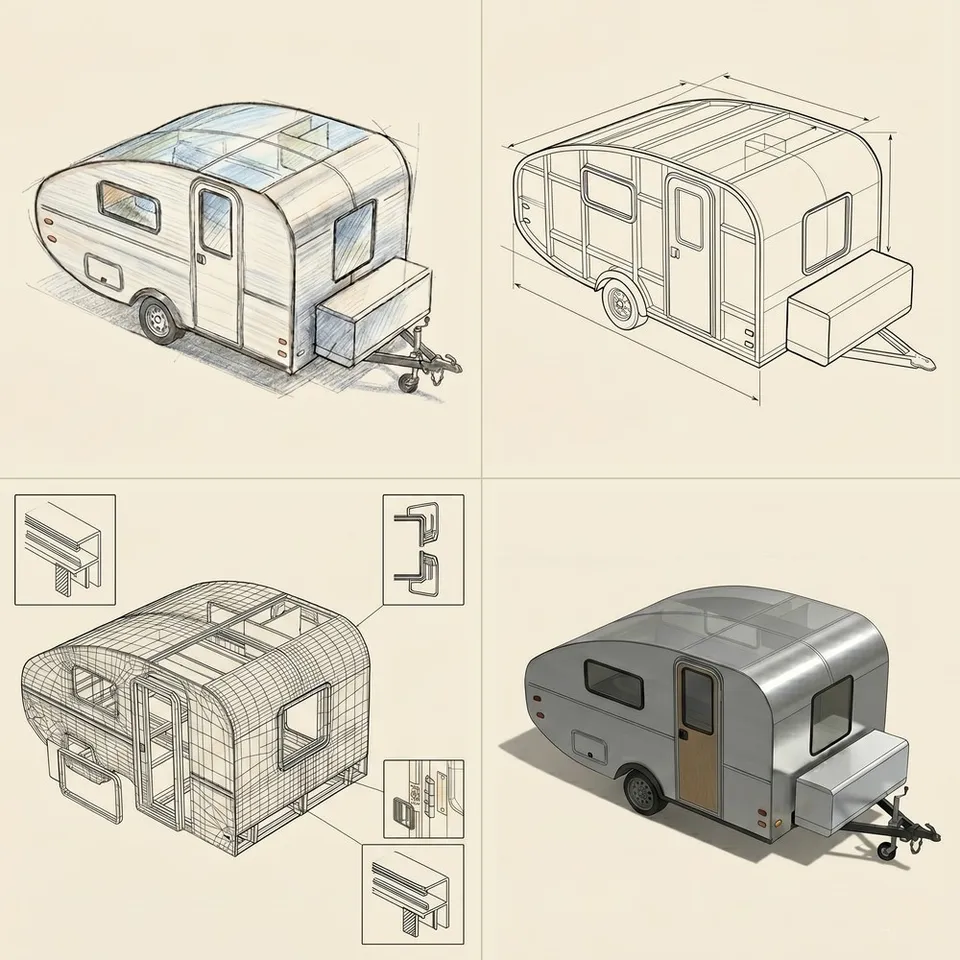
Built on 280+ products engineered at Cast Iron CAD.
PROOF · TRACK RECORDThe Viability Sprint isn’t a generic AI tool wrapped in marketing. Its questions, its structure, and its outputs are modelled on engineering practice at Cast Iron CAD since 2010: the same questions a working engineer would ask in a paid consultation, scripted and reviewed against real manufacturing constraints.
The methodology is also taught at the University of Brighton and has been delivered remotely to early-stage founders on Loughborough University’s LUinc programme.
What this means for you: you’re not guessing whether the Sprint will catch what matters. It’s already been stress-tested against hundreds of real products going through the actual development process.
A lightweight pass through stages 01 to 05.
POSITION · FIRST-PASS TRAVERSAL- 01 Idea
- 02 Discover
- 03 Innovate
- 04 Evaluate
- 05 Define
- 06 Design
- 07 Engineer
- 08 Develop
- 09 Manufacture
- 10 Deliver
– AMBER STAGES 01–05 · the full 10-stage process, activities per stage, and AI vs engineer coverage lives on How It Works.
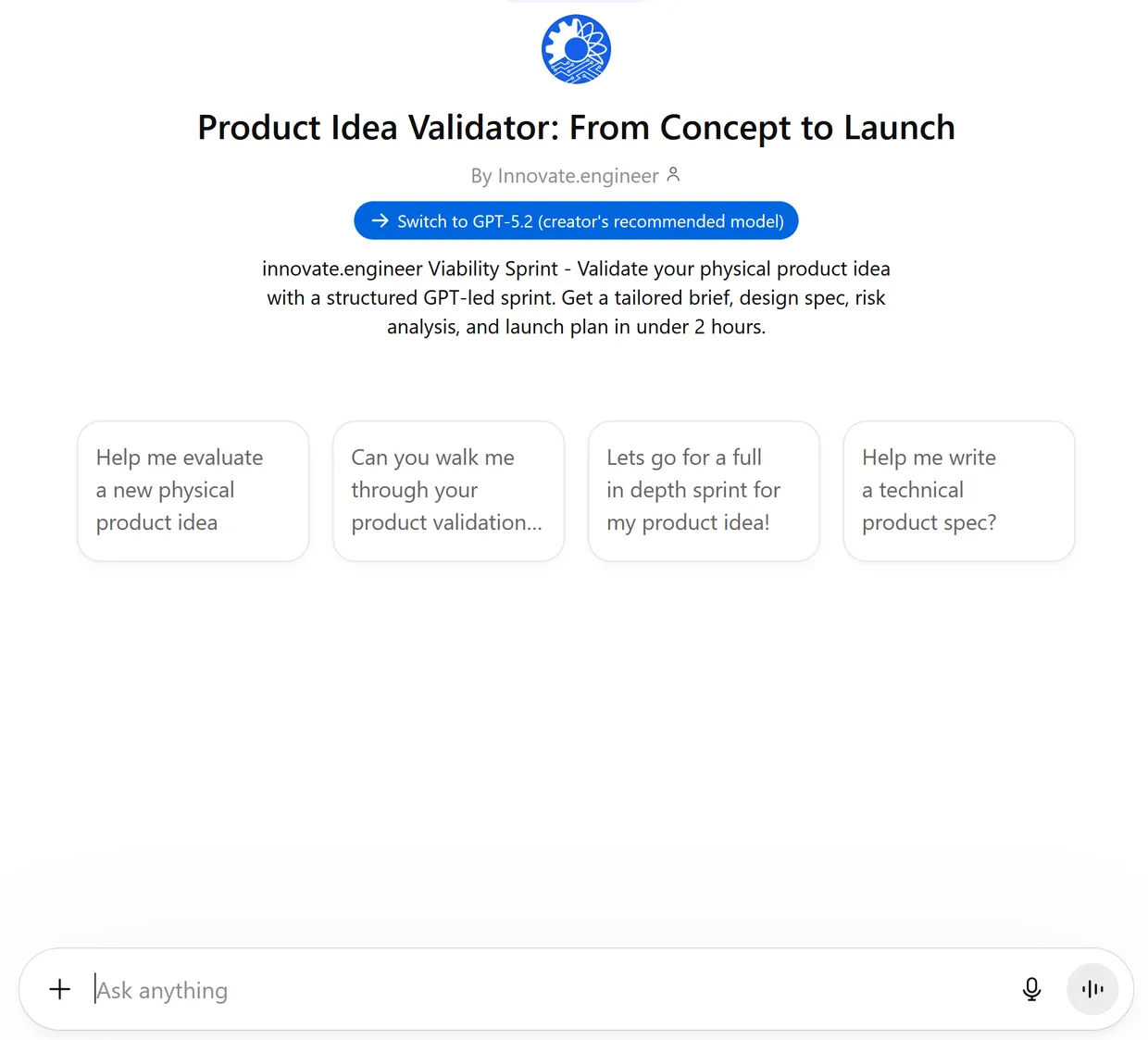
The interview, scripted by experienced engineers.
MECHANISM · HOW THE FIRST-PASS WORKSIn a paid project we’d spend days per stage with an engineer leading the work. The AI compresses the first pass into a structured interview you complete in a single session, scripted and pressure-tested by the same engineers who run the paid version.
You won’t get engineering judgement out of it. You will get the document you’d otherwise only see after a paid consultation: enough to make the next call on your own terms, or to brief an engineer with confidence.
Two deliverables, yours to keep.
OUTCOMES · WHAT YOU WALK AWAY WITHOUTPUT · SPECIFICATION
A portable specification.
FORMAT · STRUCTURED · COPY-READY
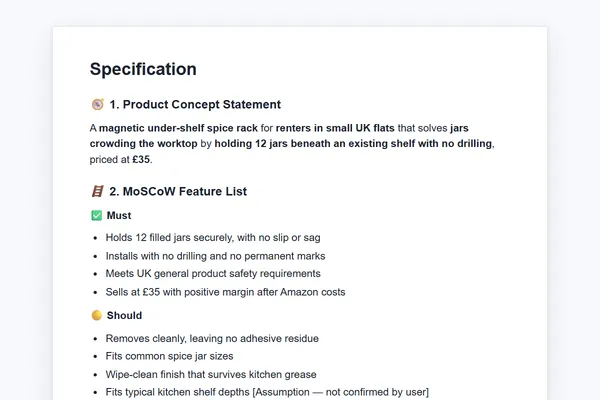
- Product concept statement
- Prioritised feature list with rationale
- Technical feasibility notes and manufacturing constraints
- Structured, shareable format any engineer can read
OUTPUT · VIABILITY REPORT
Honest read on whether it’s ready.
FORMAT · STRUCTURED · SEPARATE FROM SPEC
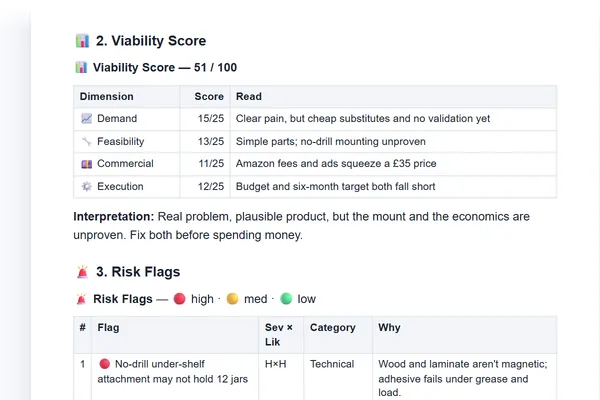
- Competitors, and where your idea sits in the market
- A viability score across demand, feasibility, commercial and execution
- Risk flags, the most serious first
- Indicative timeline with stage-by-stage durations
- Confidence-rated cost envelope
- Five recommended next steps, ranked
What people ask before starting.
OBJECTIONS · STRAIGHT ANSWERSHow is this different from just using ChatGPT?
ChatGPT will chat with you about your idea. The Sprint asks five scripted questions, the ones a working engineer asks at the start of a project, one at a time and in a fixed order, then produces two structured deliverables you can act on: a Specification and a Viability Report. You can’t get that from a blank ChatGPT window.
Is my idea safe?
Innovate Engineer can’t see your conversation. Custom GPT builders are blocked from accessing user chats. How OpenAI handles the text depends on your own ChatGPT account settings, so review your data controls if this matters to you. In Claude, the Sprint runs in your own Claude account and your Claude privacy settings decide how Anthropic handles it. If you engage paid review and your Viability Report flags qualifying IP, an NDA is put in place before engineer review begins. The free Sprint needs no NDA because no human ever reads your chat.
What if the AI gets it wrong?
It will, on some things. AI is good at structured questioning and fast at surfacing patterns. It’s weak at judging manufacturability, commercial context, and real-world engineering constraints, which is exactly where the £129 Engineer-Verified Review earns its fee. The Sprint is honest about what it can and can’t do; you decide how much further to take it.
Is it really free?
Yes. Zero cost, no signup, no lead-nurture sequence. If you want a human review of what comes out, the Engineer-Verified tier is £129 and only starts if you ask for it.
How long does it take?
About 15 minutes for a complete quick-draft Specification and Viability Report. It’s designed as a first-pass, enough to decide what to refine, brief, or move on from. Add detail yourself, or hand it to an engineer for the £129 Engineer-Verified Review.
Who’s it for?
Physical products that get made, packed and shipped. Not apps. Not services. If it has a cost per unit and a manufacturing route, you’re in scope.
When you want a human to verify it.
NEXT · PAID OPTIONSSome people run the sprint and go straight to prototyping. Others want an engineer to pressure-test the output before they commit real money.
Either is fine. The sprint output is portable, any capable engineer can read it. Our paid tiers exist for people who’d rather have us do the verification on the same methodology.
NOTE · NO COMMITMENT
If it’s not for you, close the tab.
No payment. No signup. No sales call. Keep the Specification and Viability Report either way. Come back when the idea is ready for a human to verify, or don’t.